
As an educator, I am always seeking ways to foster connections and increase awareness among my students. My goal is to empower children as learners both inside and outside the classroom. One of the most impactful tools I’ve discovered to help achieve these objectives is the practice of mindfulness and gratitude.
Over time these activities make lasting and positive impacts that reach beyond academic progress. For example, a daily practice of beginning class by asking my students to write and share three new things to be grateful for has transformed interpersonal connections, led to meaningful discussions, and relieved tension. This has proven to calm and clear the mind so a student can increase their active engagement and see the process of learning as positive and progressive. Gratitude is a relatively simple practice yet complex in its positive impact because it directs the focus to present goodness. Gratitude sharing also nurtures within each of my classes a community of listeners that care and inspire each other with unique perspectives. Finally, this grounding exercise that reflects on happiness is a habit that can be used anytime as needed. When we’re grateful, we center ourselves in positivity. This in turn reduces stress and helps transition brains to be ready to engage in new learning opportunities. This is reflective of the type of community Eagle Hill aspires to be and the type of student that we wish to form.
“The more you create happiness, the more your brain follows, and it’s harder and harder to feel negative,” says Shawn Achor, Harvard professor and author of evidence-based studies of positive psychology and happiness including The Happiness Advantage: The Seven Principles of Positive Psychology That Fuel Success and Performance at Work. “Your brain at positive has a significant advantage over your brain at negative,” according to Shawn Achor’s research. He has done decades of work in this area that schools and communities use to “prove that small, positive interventions can not only improve emotional well-being, but that it then has a massive impact upon academic achievement.”
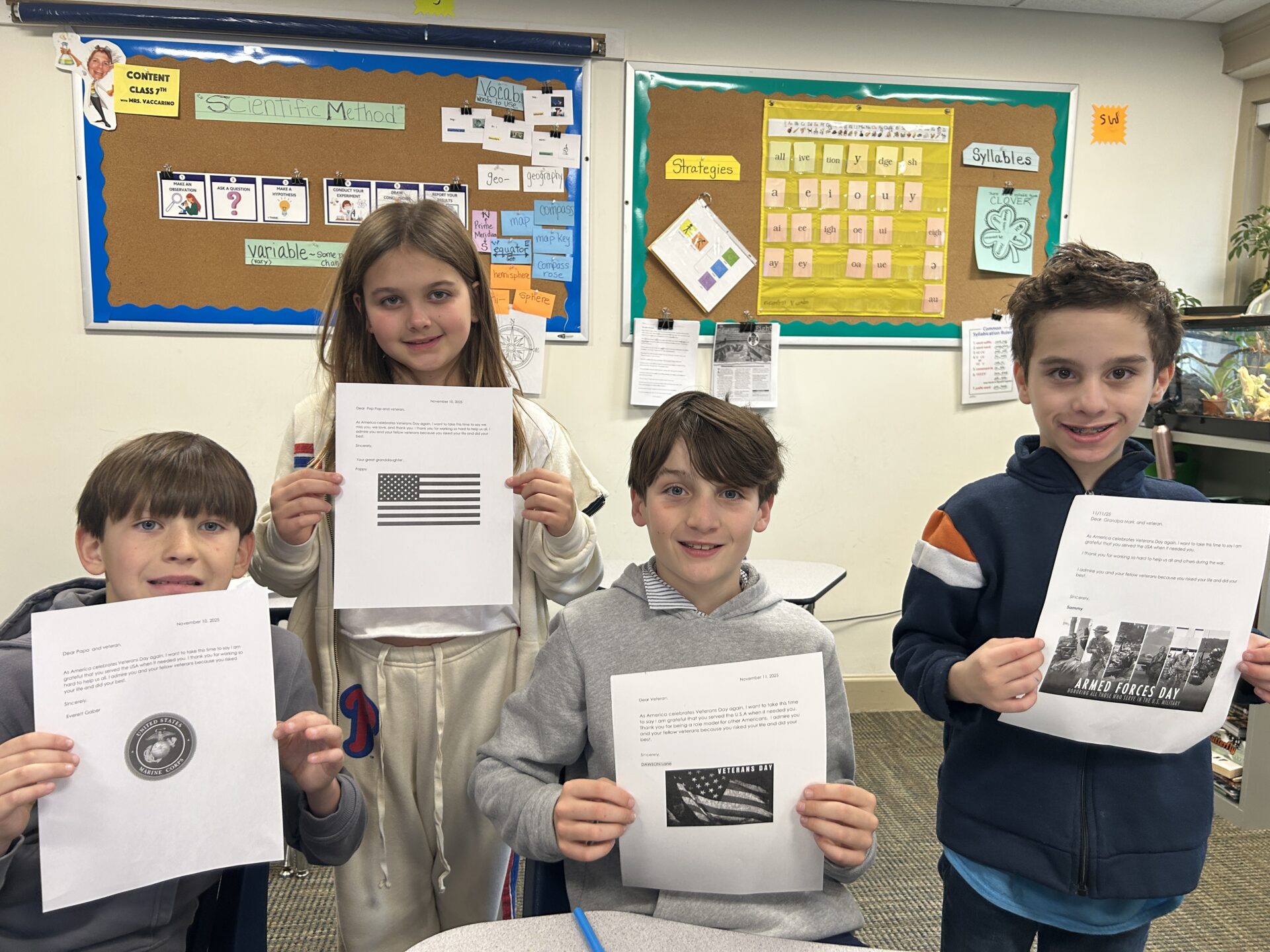
At Eagle Hill, we specialize in paying very close attention to creating opportunities for our students to feel at home in school and fostering relationships that support them as they grow. Many of our children have not experienced this in their academic careers previously. As a result, this social and emotional learning has a direct and positive effect on raising academic achievement. In order to amplify our impact, we consistently express gratitude and perform acts of kindness throughout the entirety of the Eagle Hill experience. The language of learning how to learn is practiced, positive thinking is part of our daily routine, and we assist our students in generalizing what they learn. Even when they struggle, experience with positivity and gratitude can provide the comfort and motivation that’s needed for children to persist.
As a community, Eagle HIll celebrates these incremental acts of kindness and gratitude as they have proven to be a vital component of our mission and essential to our students’ overall success. I am grateful every day for the opportunity to be a part of this community that strives to discover and create in order to educate the whole child.
_______________________________________________
Chris Vaccarino joined the Eagle Hill School faculty in 1993.