A Home Away from Home: Inside Eagle Hill’s 5-Day Boarding Program
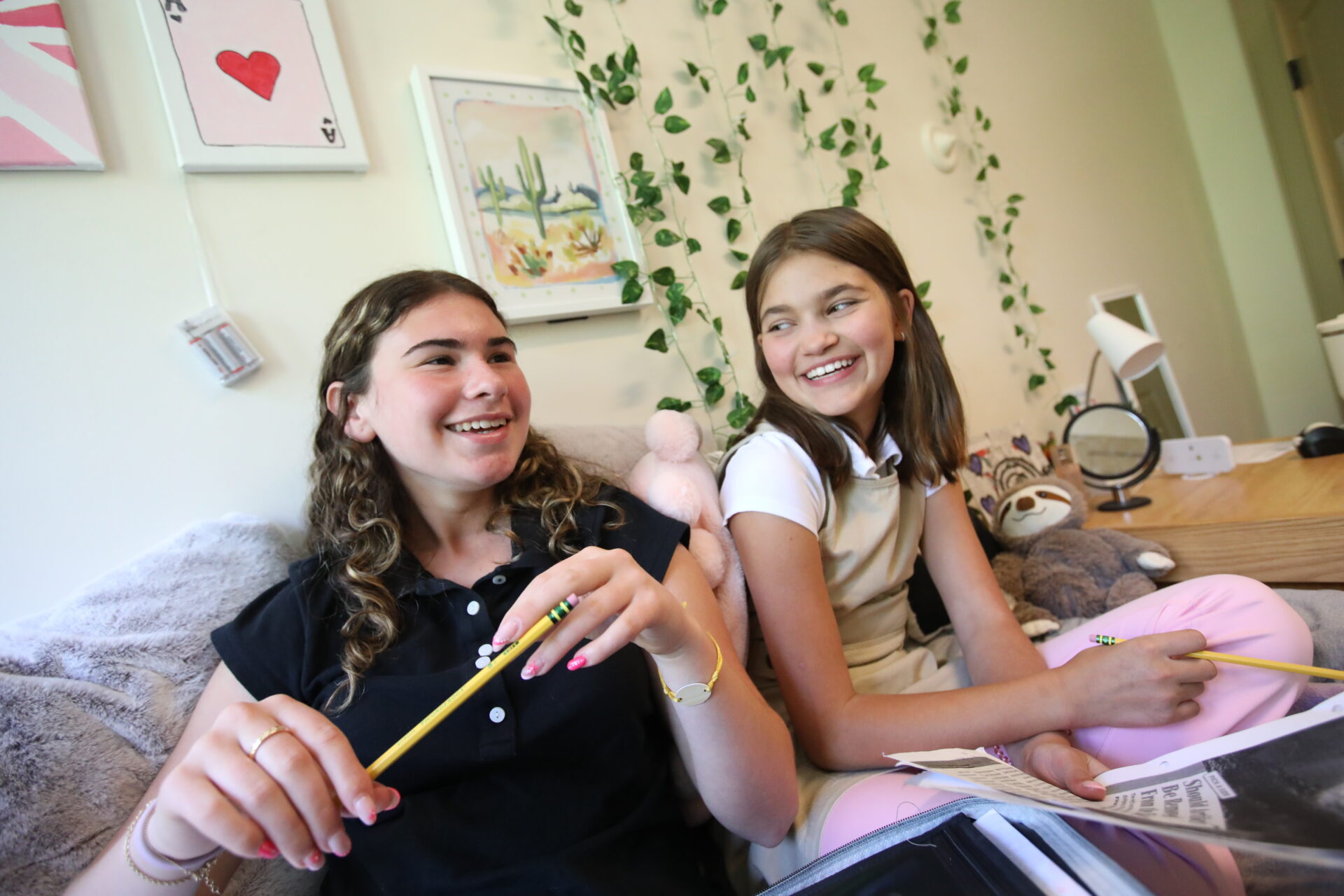
For students at Eagle Hill, the end of the school day marks the beginning of something equally valuable: life in a close-knit, nurturing community. Our 5-day boarding program is a home away from home where students build connections, develop independence, and form friendships that often last a lifetime.
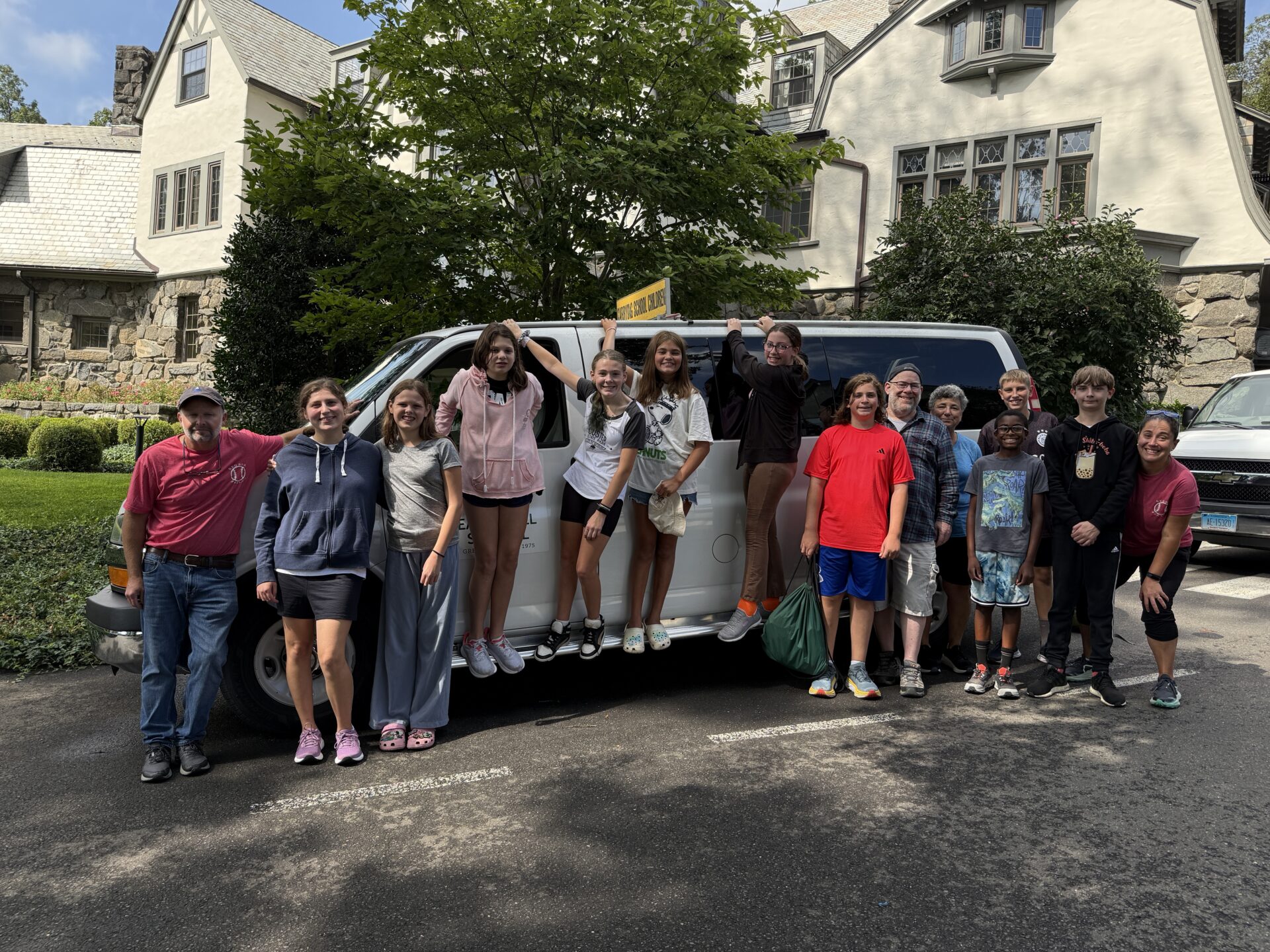
From the moment they arrive, students are surrounded by adults who model and support community living. “I think it's all about teamwork,” says Jeff Leonard, co-director of the Boarding Program, “and it starts from that first weekend, with our dorm trip to Hershey Park and having fun as a group.”
Evening study halls, shared meals, and casual hangouts on campus all offer opportunities for students to grow both socially and emotionally. Independence is nurtured, not expected overnight. As Natasha Moore, co-director of the Boarding Program, explains, “the individually tailored independence program is set up for each student [and] is designed to help them grow to their maximum potential.”
“I think that for a lot of students who are either the only child, or have a big age gap with their siblings,” adds Leonard, “the dorm offers them an opportunity to really work on their social skills in a setting that is well-managed and facilitated by the adults.”
Beyond structured programming, it’s the relationships that define the Eagle Hill boarding experience: between students and their peers, and between students and faculty. Moore reflects, “The connection to our mission is so apparent in the dorm. Just seeing what happens with the kids- and also the faculty- and the relationships that they build. It's just been an awesome experience for me.”
That sense of connection carries into every part of school life. “You see it in the interactions between dorm kids during the day program,” Moore shares. “They have each other's backs.”
Living and working on campus has been a defining part of Leonard’s own Eagle Hill journey. “Joy and Brandon Delisle did a fantastic job of creating a family atmosphere,” he says, referencing the foundational leadership that helped shape the program. “Working in the boarding program at Eagle Hill has been one of my favorite experiences.” He continues, “When my wife and I had kids, my kids had 36 brothers and sisters living on campus… It was one big family.”
And that family spirit lasts long after students graduate. “These connections that [students and faculty] make during these long weekends or, even if it's just a fishing trip that we're going on,” Leonard says, “those are the critical connections that you'll have kids showing up here 30 years later talking to you about.”
Boarding also gives students a chance to prepare for what’s next. “For many of our kids who are looking at potentially moving into a boarding program after they graduate from Eagle Hill, it's a critical part in being successful in that next stage,” Leonard notes.
The program is designed with flexibility, too. Families exploring the option are welcome to ease in. As Leonard shares, “we have room in the dorm right now, and we are more than happy to give it a trial” of a couple days or weeks.
Whether it’s a short-term experience or a multi-year journey, Eagle Hill’s 5-day boarding program continues to offer something rare and meaningful: a structured, joyful, and deeply connected residential life experience that supports students exactly where they are, and helps them grow into who they’re becoming.
Kara Ashley is the Director of Enrollment at Eagle Hill School. Her roots in independent boarding schools run deep, and she describes the Eagle Hill boarding experience as transformative and joyful.
Celebrating Kindness Month at Eagle Hill: Growing Self-Awareness, Gratitude, and Joy
November is World Kindness Month, a natural moment to pause, reflect, and practice gratitude as Thanksgiving approaches. At Eagle Hill, our community has embraced this season wholeheartedly through activities that build meaningful connections and strengthen the core competencies of our social-emotional learning (SEL) curriculum. Rooted in the CASEL framework, these skills- self-awareness, self-management, social awareness, relationship skills, and responsible decision-making- guide students toward understanding themselves, caring for others, and contributing positively to our community.
This month, we returned to the very first theme of our SEL curriculum: self-awareness. As School Counselor Allison Modica shared, “Our first unit is self-awareness. And this all goes into how we are being aware of our own actions and how we can bring joy to other people… how our actions affect other people, and how we want to be treated by others.”
This lens helped our students reflect not only on what kindness looks like, but why it matters. When children understand their own feelings, intentions, and choices, they begin to recognize how those actions ripple outward: lifting others, strengthening friendships, and filling emotional “buckets” all across campus.
Catching Kindness: The Kindness Initiative
One of the most joyful traditions this month was our kindness initiative. Community members were encouraged to notice and practice genuine acts of kindness- big or small- and “catch” each other making a positive difference. When teachers witnessed a student offering to help, including others, or making a thoughtful choice, they wrote their name on a kindness ticket that was added to the kindness jar. Each Friday in November, a member of our counseling team drew three tickets, and the winners received a coveted civvies (free dress) pass.
But the real reward? The pride and happiness students felt in being recognized for their kindness.
As Allison shared, the students were eager to participate: “They were really excited to put tickets in the jar. And that feels nice to see… They would say, ‘Oh, look, I got two tickets from this person because…’ They loved to share what they got the tickets for.”
The initiative created a beautiful cycle:
Students practiced self-awareness by noticing their own actions.
They built social awareness by recognizing how others felt.
They strengthened relationship skills by celebrating kindness together.
They engaged in responsible decision-making by choosing to act thoughtfully.
They developed self-management as they held onto their tickets and followed through with intentional acts.
“It was not only the original act of kindness,” Allison reflected, “they also felt good about themselves and proud for being acknowledged for that.”
A Kindness Tree Takes Root in the Lower School
In the Lower School, students are bringing kindness to life in a special way. With the creative help of art teacher Hannah Jupiter, students are creating a Kindness Tree, a growing art piece where acts of kindness, moments of gratitude, and messages of encouragement are displayed as leaves.
Each leaf represents a moment where someone filled another’s emotional bucket or recognized when someone filled theirs. The tree will serve as a joyful, colorful reminder that kindness is something we cultivate together.
A Month of Gratitude, A Year of Growth
As we look back on November, one thing is clear: kindness isn’t just an initiative at Eagle Hill, it’s a practice woven into who we are. Our students learn every day that kindness strengthens community, builds confidence, and creates joy.
And as we head into the holiday season, we’re grateful for the ways our students lift each other up, notice the good, and make our campus a place where everyone feels seen, valued, and connected.
Here’s to kindness that lasts long beyond November and to the many ways our students continue to help each other soar.
Learning Takes Flight: Inside the Lower School Egg Drop Project
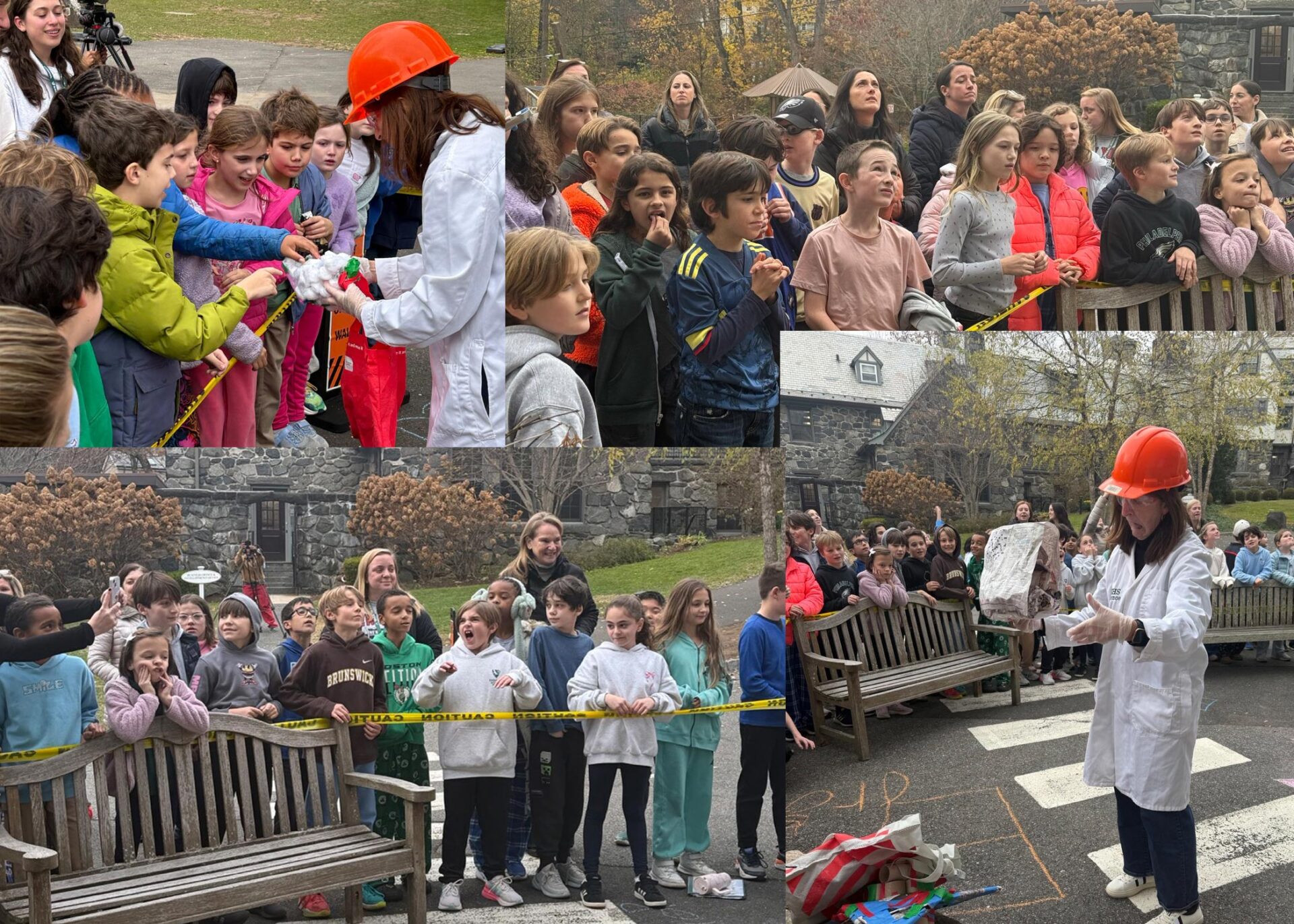
If you walked through the Lower School this month, you likely felt the buzz: students sketching designs, testing prototypes, debating the merits of rubber bands versus cotton balls, and huddling excitedly with partners. The annual Egg Drop Project is back, and with it comes design thinking, collaboration, and plenty of joyful learning.
At Eagle Hill, this isn’t just a classic STEM challenge. As Lower School teacher Jamie MacNutt explains, the project is intentionally crafted to strengthen scientific thinking, partner skills, and executive functioning, and it’s supported by our integrated team of specialists who push into the classroom to provide individualized guidance. Counselors and language specialists help support the entire process; from design to completion.
Building a Foundation: The Scientific Process in Action
In the weeks leading up to the big drop, students spend time revisiting and applying each step of the scientific process in smaller hands-on activities.
Jamie shares, “for the week leading up to the egg drop, we review the scientific process with smaller hands-on activities that they do with a partner or individually; this really reinforces what it means to observe, what it means to ask meaningful questions, create a hypothesis, and it helps to connect some of these ideas to their other classes.”
One of the highlights of the unit is helping students recognize how transferable their reasoning skills are. As Jamie puts it, “a hypothesis in science is similar to a prediction in literature class, or an estimate in math class...we use the information we have to make a smart guess.”
This academic integration is intentional. Through thoughtful planning and repetition, students deepen their understanding of how learning connects across subjects.
They also practice crucial executive functioning skills. “Conducting an experiment challenges students to really plan ahead and stay organized, record data, and show results which are the executive functioning skills we are always working to practice.”
By the time Egg Drop Day arrives, students aren’t just ready, they’re invested in the entire process and understand how each step contributes to the whole.
A Project Designed for Collaboration, Communication, and Creativity
The Egg Drop Project is also a celebration of teamwork: “The egg drop is a project where we're using our skills in pragmatic language, partner work, and science.”
Because Eagle Hill’s Lower School classrooms are supported by both language specialists and counselors, every group has direct coaching in communication and social-emotional learning. Students practice turn-taking, negotiating ideas, and problem-solving during moments of disagreement: skills as vital as any scientific principle.
This year, teachers added a creative twist: randomized core materials.
While “each group has some construction items that are standard,” teams also draw a special item out of a hat. “Students chose core elements out of a hat, so they have to be creative with the materials they have, whether it's a yogurt container, a toilet paper tube, or an aluminum can that they're going to work with.” This requires students to be flexible and creative while they work together to figure out the best way to use their special item. The result? A joyful challenge that sparks innovation, flexible thinking, and resourcefulness: hallmarks of design thinking.
Everyone Gets to Be a Scientist
The egg drop isn’t just for the builders. Students across the Lower School are invited to participate through prediction and data collection.
Jamie explains: “The students who are not building the egg drop are also invited to make some predictions.”
On the day before the event, the vehicles were on display in the Curriculum center, and each math class made predictions about which vehicle would be the most successful. Students added tally marks to a chart and practiced graphing skills. We also displayed the chart during the event so students could see the success in real time. This provided students with background knowledge before the drop.
Skills That Soar Beyond the Project
When the baskets, canisters, tubes, and parachutes finally take flight, students aren’t just watching eggs fall from above. They’re seeing the culmination of weeks of:
Design thinking
Problem solving
Data collection and analysis
Collaboration and communication
Executive functioning skills
SEL and partner skills
Creative risk-taking and iteration
And, of course, the best part: celebrating each other’s hard work.
The Lower School Egg Drop Project shows our students that learning can be hands-on, joyful, and deeply connected across disciplines. At Eagle Hill, it’s not just about protecting an egg, it’s about giving students the confidence, skills, and creativity to watch their ideas take flight.
Gratitude as an Educational Tool
As an educator, I am always seeking ways to foster connections and increase awareness among my students. My goal is to empower children as learners both inside and outside the classroom. One of the most impactful tools I've discovered to help achieve these objectives is the practice of mindfulness and gratitude.
Over time these activities make lasting and positive impacts that reach beyond academic progress. For example, a daily practice of beginning class by asking my students to write and share three new things to be grateful for has transformed interpersonal connections, led to meaningful discussions, and relieved tension. This has proven to calm and clear the mind so a student can increase their active engagement and see the process of learning as positive and progressive. Gratitude is a relatively simple practice yet complex in its positive impact because it directs the focus to present goodness. Gratitude sharing also nurtures within each of my classes a community of listeners that care and inspire each other with unique perspectives. Finally, this grounding exercise that reflects on happiness is a habit that can be used anytime as needed. When we’re grateful, we center ourselves in positivity. This in turn reduces stress and helps transition brains to be ready to engage in new learning opportunities. This is reflective of the type of community Eagle Hill aspires to be and the type of student that we wish to form.
“The more you create happiness, the more your brain follows, and it’s harder and harder to feel negative,” says Shawn Achor, Harvard professor and author of evidence-based studies of positive psychology and happiness including The Happiness Advantage: The Seven Principles of Positive Psychology That Fuel Success and Performance at Work. “Your brain at positive has a significant advantage over your brain at negative,” according to Shawn Achor’s research.He has done decades of work in this area that schools and communities use to “prove that small, positive interventions can not only improve emotional well-being, but that it then has a massive impact upon academic achievement.”
At Eagle Hill, we specialize in paying very close attention to creating opportunities for our students to feel at home in school and fostering relationships that support them as they grow. Many of our children have not experienced this in their academic careers previously. As a result, this social and emotional learning has a direct and positive effect on raising academic achievement. In order to amplify our impact, we consistently express gratitude and perform acts of kindness throughout the entirety of the Eagle Hill experience. The language of learning how to learn is practiced, positive thinking is part of our daily routine, and we assist our students in generalizing what they learn. Even when they struggle, experience with positivity and gratitude can provide the comfort and motivation that’s needed for children to persist.
As a community, Eagle HIll celebrates these incremental acts of kindness and gratitude as they have proven to be a vital component of our mission and essential to our students’ overall success. I am grateful every day for the opportunity to be a part of this community that strives to discover and create in order to educate the whole child.
_______________________________________________ Chris Vaccarino joined the Eagle Hill School faculty in 1993.
STEM in action: Students Set Sail in the Eagle Hill Regatta
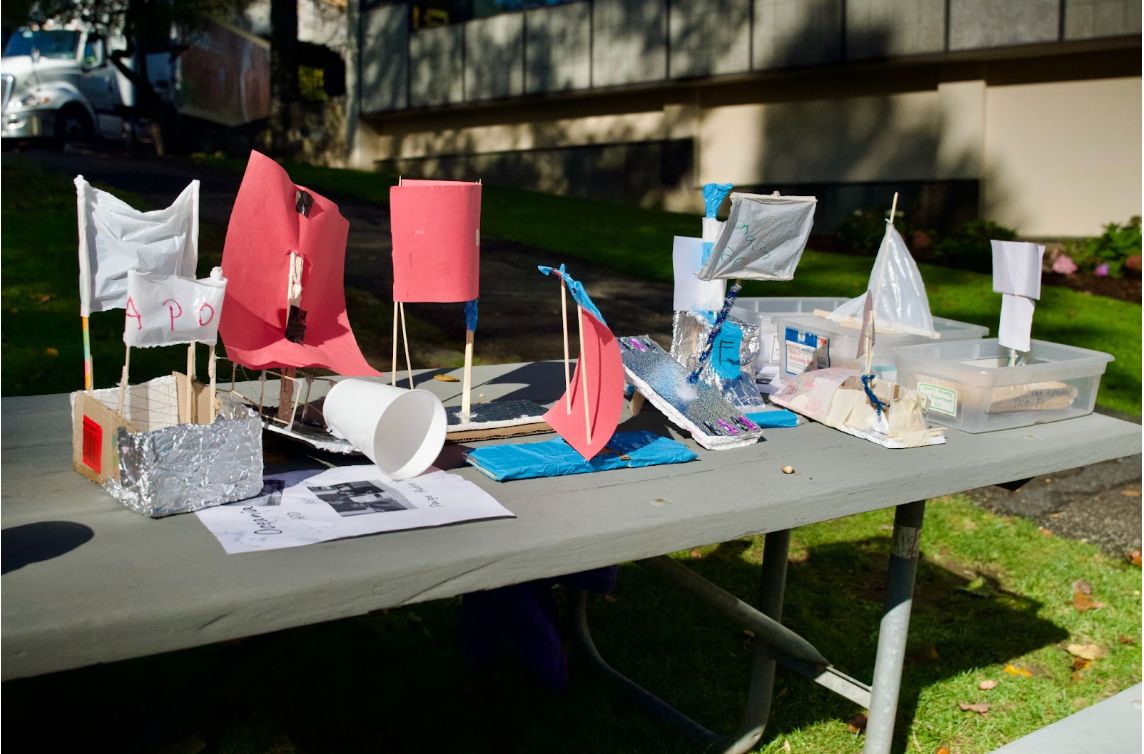
The annual Eagle Hill Regatta turns STEM learning into hands-on discovery as students design, build, and race boats using only materials found in the classroom. Guided by design thinking, students begin by brainstorming and sketching their prototypes, collaborating with a partner to bring their vision to life. Each supply- from paper clips to popsicle sticks- comes with a dollar value, so part of the challenge involves budgeting strategically while applying math skills.
Once construction is complete, it’s time to test! Boats are placed in water and propelled by a fan, with judges evaluating stability and speed. In the event of a tie, the team that spent the least amount on materials takes the win, underscoring the importance of efficiency and ingenuity.
Throughout the project, students engage deeply with the scientific method: forming hypotheses, testing variables, and reflecting on results to refine their designs. “It’s great to see students apply what they are learning in class in a practical way,” shared Emma Lipman, Upper School science teacher. Beyond physics and engineering, the activity reinforces language skills, problem solving, and teamwork, reminding students that innovation often floats best when powered by collaboration and creativity.
_______________________________________________ Kara Ashley is the Director of Enrollment at Eagle Hill.
A Golden Beginning
The first weeks of this school year have been nothing short of extraordinary as we celebrated the start of Eagle Hill’s 50th year of educating the whole child. From joyful reunions to new friendships, our campus has been alive with learning, laughter, and connection.
Before the first bell even rang, new students and families gathered for a relaxed morning of play, connection, and fun at Bruce Park. Joined by members of our faculty and the EHS Parents Association, this kickoff helped to ease the transition to school, foster new friendships, and set the tone for a joyful year ahead.
At the Welcome Back Parent Social, families reconnected and met new families while enjoying delicious bites and beverages from small businesses proudly owned by members of our EHS community. Back to School Night invited parents to step into their children’s shoes for an evening while following their schedules, meeting teachers, connecting with fellow families, and gaining a deeper understanding of the tailored academic program that defines the Eagle Hill experience.
Our 50th Golden Gala was a once-in-a-lifetime homecoming event that brought together more than 500 members of the Eagle Hill family- past and present- for a celebration of our history and community. The number of founding faculty, pioneer students, alumni, and their families who returned to campus to celebrate five decades of transformative education is a testament to the Eagle Hill magic: a community where everyone is valued and celebrated. Rounding out the festivities was one of our most beloved traditions: Family Fun Day. With games, music, inflatable obstacle courses, face painting, a dunk tank, and more, families came together to laugh, play, and celebrate what it means to be part of the Eagle Hill community.
As we look back on these memorable first weeks, we also look ahead with gratitude and excitement. Our 50th year is not only a celebration of where we’ve been but a promise for what lies ahead: a future filled with learning, joy, creativity, and the confidence to soar.
_______________________________________________ Kara Ashley is the Director of Enrollment at Eagle Hill.
When Summer School Feels Like Camp: The SOAR Experience
Picture this: It's 3:30 PM on a summer afternoon, and children are climbing into cars with huge smiles stretched across their faces, chattering excitedly about their day. These aren't kids returning from a typical camp or activity—they're students who just completed a full day of academic learning combined with enriching activities. Yet as Megan Colvin, co-director of SOAR, observes, "Most of the kids come away without even thinking they're at summer school. They think they're at camp... [they] get into the car at the end of the day with huge smiles on their faces and talking about how much fun they had all day in school."
This is the magic of Eagle Hill's SOAR summer program, where traditional notions of summer school are turned upside down, creating an environment where learning feels like adventure and academic growth happens through joy.
The Eagle Hill Difference: Learning Through Play
What transforms reluctant learners into enthusiastic participants? The answer lies in Eagle Hill's innovative approach to education. "Teachers do an incredible job of making sure that everything's multisensory and game focused and that they're up and moving," explains Colvin. Many of the students who come from outside of Eagle Hill “don't even realize the amount of learning they're doing because it is so interactive and fun."
This multisensory approach isn't just about keeping kids engaged, it's about meeting students with language-based learning disabilities exactly where they are. When learning involves movement, games, and hands-on activities, abstract concepts become understandable, and challenging material becomes accessible. Students who might struggle in traditional classroom settings suddenly find themselves succeeding, building confidence alongside academic skills.
Academic Growth Through Adventure
The SOAR program seamlessly blends rigorous morning academics with afternoon adventures that reinforce learning in real-world contexts. Students might practice reading comprehension through treasure hunts, develop math skills through cooking projects, or strengthen executive function through collaborative games. This integration ensures that learning doesn't stop when the textbooks close, it continues through every activity and interaction.
The beauty of this approach is that students don't compartmentalize their learning. Skills developed in morning reading sessions carry over to afternoon problem-solving activities. Communication strategies practiced in language arts become tools for navigating social situations during recreational time. The entire day becomes a playground of learning opportunities.
The CIT Program: Leadership in Action
Perhaps nowhere is the program's commitment to growth more evident than in its new Counselor-in-Training (CIT) program. "What we wanted to do was focus on independence," shares program coordinator Allison Modica. "They are getting real world experience, [that] they can use outside of Eagle Hill... My job is to provide them with as many opportunities to gain independence that work for them as I can."
The CIT program follows a carefully structured progression over four weeks. Students begin with observation in Week 1, develop feedback skills in Week 2, create personal goals in Week 3, and practice implementing those goals in Week 4. This isn't just about preparing teens for future jobs, it's about building the executive function skills and self-advocacy abilities they'll need throughout their lives.
One remarkable success story exemplifies this approach: a CIT student who independently planned and executed "Summerween," a Halloween-themed event in July. This student wrote emails, created detailed proposals, managed logistics, and coordinated with multiple staff members, all while developing crucial real-world skills in project management, communication, and leadership.
Building Community Through Mentorship
The cross-age interactions fostered by the CIT program create a natural mentorship dynamic that benefits everyone involved. "During recesses, the older kids are playing with the younger kids," notes Modica. "It's really nice for some of these younger kids to have older kids to look up to.”
These relationships develop organically as CITs take initiative in starting tag games, offering encouragement to struggling peers, and modeling positive behaviors. For the younger students, having teenage mentors provides inspiration and support. For the CITs, the responsibility of being a role model reinforces their own growth and builds empathy and leadership skills.
The Ripple Effect of Joy
What makes SOAR truly special isn't just its innovative teaching methods or leadership opportunities, it's the culture of joy and acceptance that permeates every aspect of the program. When students feel safe to take risks, make mistakes, and celebrate successes, learning becomes natural and sustainable.
This joy is contagious, spreading from students to families to the broader Eagle Hill community. Parents witness their children's newfound confidence and enthusiasm for learning. Educators see students who were once reluctant participants become eager leaders. The entire school community benefits from the positive energy and growth mindset that SOAR cultivates.
A New Definition of Summer School
Eagle Hill's SOAR program proves that summer learning doesn't have to be a chore; it can be a celebration! By combining academics with joyful discovery, meaningful leadership opportunities with playful exploration, SOAR redefines what's possible when we meet students where they are and help them reach where they're going.
As those smiling faces climbing into cars at the end of each day demonstrate, the most powerful learning happens when students don't even realize they're learning—when education feels so engaging, so relevant, and so joyful that it simply becomes a natural part of living and growing.
For families seeking a summer experience that nurtures both academic growth and personal development, SOAR offers something truly special: a place where every child can discover their potential, build lasting friendships, and experience the pure joy of learning.
_______________________________________________ Kara Ashley is the Director of Enrollment at Eagle Hill.
Ready to learn more about how Eagle Hill's innovative approach could benefit your child? Visit our campus during summer program hours, explore our year-round educational philosophy, or contact our admissions team to discover how SOAR might be the perfect fit for your family's summer plans.
Simple Tips for Supporting a Struggling or Reluctant Reader this Summer
Summer is the perfect time to slow down, soak up the sunshine, and sneak in some meaningful literacy support at home! As a parent, you are your child’s first and most impactful teacher. Whether your child is a reluctant reader, a struggling reader, or just needs a little extra encouragement, there are many simple, effective ways to foster a love of reading over the summer months. Here are a few suggestions from Abby Hanrahan, an Eagle Hill Educational Advisor, Co-Director of the Reading Department, and advocate for building lifelong literacy.
1. Model Reading Every Day
One of the most powerful ways to support your child’s literacy is to model it yourself. Reading is a life skill, just like brushing your teeth or tying your shoes, and when kids see adults treating reading as an important part of daily life, they’re more likely to value it, too.
Let your child see you reading a book, the newspaper, or even a recipe. Set aside a short window each day for everyone in the family to read, together or in parallel. And don’t stop reading aloud to your child just because they’ve learned to read independently! Listening to a fluent reader helps children build vocabulary, comprehension, and a deeper understanding of language.
2. Sneak in Reading Throughout the Day
Reading doesn’t only happen in books! Opportunities to practice reading are all around us: on signs, menus, maps, and more. Ask your child to help you add items to the grocery list or read the ingredients on a food label. Take them shopping and encourage them to locate the items on your list. This kind of real-world reading not only strengthens literacy, but it also reinforces the idea that reading is a necessary- and useful- life skill. Bonus: you can sneak in a little math while comparing prices or calculating change!
3. Unplug on Car Rides
Today’s car rides often mean everyone is plugged into their own screen or device. By unplugging and playing classic word games like “I Spy” or the alphabet game, you can make the most of this time together. These simple, screen-free games build vocabulary, letter awareness, rapid naming, and categorizing- all of which are essential components of strong language development. Best of all, they’re fun and don’t require any preparation or materials.
4. Listen to Audiobooks as a Family
Whether you're on a road trip or relaxing at home, audiobooks are a great way to engage your child in rich language experiences. Listening to stories read aloud can help improve vocabulary, comprehension, prosody (the rhythm and expression of language), and critical thinking skills. Audiobooks also allow children to access high-interest stories that might be above their independent reading level, keeping them connected to content they’re excited about. Listening to- or reading- the same stories creates opportunities for connection and conversation.
Remember, summer reading doesn’t have to be a chore—and it certainly doesn’t have to look like schoolwork. With a little creativity and consistency, you can help your child stay connected to language and learning all summer long. Keep it light, keep it joyful, and keep reading!
Kara Ashley is the Director of Enrollment at Eagle Hill, a year round reading superfan, and literacy teacher passionate about helping every child discover the joy of reading.
Our Individualized Approach to Reading
For 50 years, Eagle Hill School has helped students with language-based learning differences and executive function needs build essential skills, unlock their potential, and rediscover their love of learning. At the heart of that mission is our belief that every child can become a confident, capable reader with the right instruction, support, and environment.
Individualized, Small-Group Instruction
At Eagle Hill, reading instruction is never one-size-fits-all. Our cornerstone is a small-group tutorial model, where students learn in groups of just 3 to 5 peers, allowing teachers to tailor instruction based on individual strengths and needs.
These small, focused classes target foundational reading skills including decoding, fluency, comprehension, and active reading strategies.
In the Lower School, students attend two reading tutorials each day, totaling 80 minutes of targeted phonics and comprehension instruction. As they develop the necessary reading skills, Upper School students typically transition to one daily tutorial class that coordinates with a daily study skills class to strengthen executive functioning and other essential skills.
Backed by Research, Driven by Expertise
Our reading instruction is grounded in the Orton-Gillingham methodology and the Science of Reading. Our teachers utilize a variety of trusted, research-based programs such as the PAF Reading Program, Heggerty Literacy Program, and Wilson Reading System. This approach gives our educators the flexibility to adjust instruction and create materials to provide the best program for each student’s individual needs.
Building Language Skills Across the Curriculum
Reading is just one part of a student’s broader language development at Eagle Hill. For our younger learners, oral language classes help build early communication skills. As students grow, daily literature classes offer opportunities to dive into fiction, discuss character development, explore themes, and engage with rich vocabulary and literary concepts.
Beyond these classes, Language Specialists work closely with teachers across all subjects. Whether it’s solving a word problem in math or organizing an essay in writing, students receive integrated support that reinforces literacy throughout the day.
Support That Grows With Your Child
With a team of six full-time Language Specialists, Eagle Hill ensures every student receives the support they need—through small groups, individual instruction, and collaboration with content-area teachers. As students progress, they gradually gain the skills and independence to thrive with less intensive support.
At Eagle Hill, we don’t just teach reading- we build a strong foundation for lifelong learning. Through our individualized, research-based approach, we help students grow into confident, capable readers who are ready to soar.
Kara Ashley is Eagle Hill’s Director of Enrollment, a mission-driven special educator with over 25 years in independent schools, dedicated to helping students find the right-fit learning environment where they can thrive.
Building Essential Skills for Student Success
by Kara Ashley, Director of Enrollment
At Eagle Hill School, we understand that the ability to plan, organize, solve problems, communicate effectively, and understand others is just as important as mastering reading, writing, and math. These essential skills—rooted in executive function, social language development, resilience, and communication—are what allow students to access learning and grow into confident, capable individuals.
While often referred to in broader education circles as “soft skills”, we view these abilities as anything but secondary. They are the core connectors that bring academic content to life and prepare students for meaningful participation in school, work, and life.
Why Are These Skills So Essential?
These critical life skills don’t develop by chance. At Eagle Hill, they are taught explicitly, modeled consistently, and practiced daily. For instance, while students are developing foundational literacy, they are also learning that communication includes more than just words. Through structured activities and real-life interactions, students learn to interpret facial expressions, body language, and tone—key components of social language. We may ask, “What message did your body just send?” or “How might someone else feel if they saw that face?”
We also provide direct instruction in problem-solving and resilience. Students learn how to assess the size of a problem, identify internal and external resources, and choose strategies to resolve challenges. These tools empower students to navigate obstacles and advocate for themselves with confidence. You’ll find visual supports like our problem-solving matrix displayed throughout the school, reinforcing that every student is growing into a capable, independent thinker.
Another cornerstone of our program is perspective-taking—the understanding that others may have thoughts, feelings, and experiences different from our own. Whether through social-emotional learning or reading a novel, students explore how to interpret and respect those differences. These lessons foster kindness, empathy, and a strong sense of community.
How Are These Skills Embedded in the Curriculum?
These essential skills are not taught in isolation—they’re integrated throughout the school day. Through our Integrated Services model, counselors and speech-language pathologists work alongside classroom teachers to support students in real-time and across contexts.
In the early grades, executive functioning is taught through visual schedules and checklists. As students grow, they learn to use tools like graphic organizers and planning templates to tackle multi-step tasks. These strategies are embedded into academic instruction, ensuring students are building organization, task initiation, and self-monitoring alongside core content.
In our Upper School, a daily Study Skills class offers direct instruction in executive functioning. Students learn how to manage long-term projects, take notes effectively, and reflect on their learning. One teacher keeps a visual display of arrows in the classroom, each one representing a habit or mindset needed for successful learning—from asking for help to pushing through a difficult task. Here, self-advocacy and communication are practiced with intention, whether through classroom discussions or in interactions with peers and teachers.
Beyond the Classroom
Skill building doesn’t stop when the bell rings. During lunch, students practice conversation skills, table manners, and self-advocacy—even learning how to communicate with our chef if they have food allergies. Our athletic programs emphasize teamwork, sportsmanship, and clear, respectful communication. Every corner of campus is a space for students to practice and grow these essential abilities.
Looking Ahead
After the disruptions of the pandemic, many children are still learning—and re-learning—how to connect with others, manage emotions, and function as part of a group. At Eagle Hill, we are committed to meeting this moment with intention, structure, and heart. By embedding instruction in executive function, communication, resilience, and social understanding, we are helping students not only thrive academically but also grow into thoughtful, engaged members of their communities.
To learn more about how Eagle Hill supports whole-child development, visit www.eaglehillschool.org.